
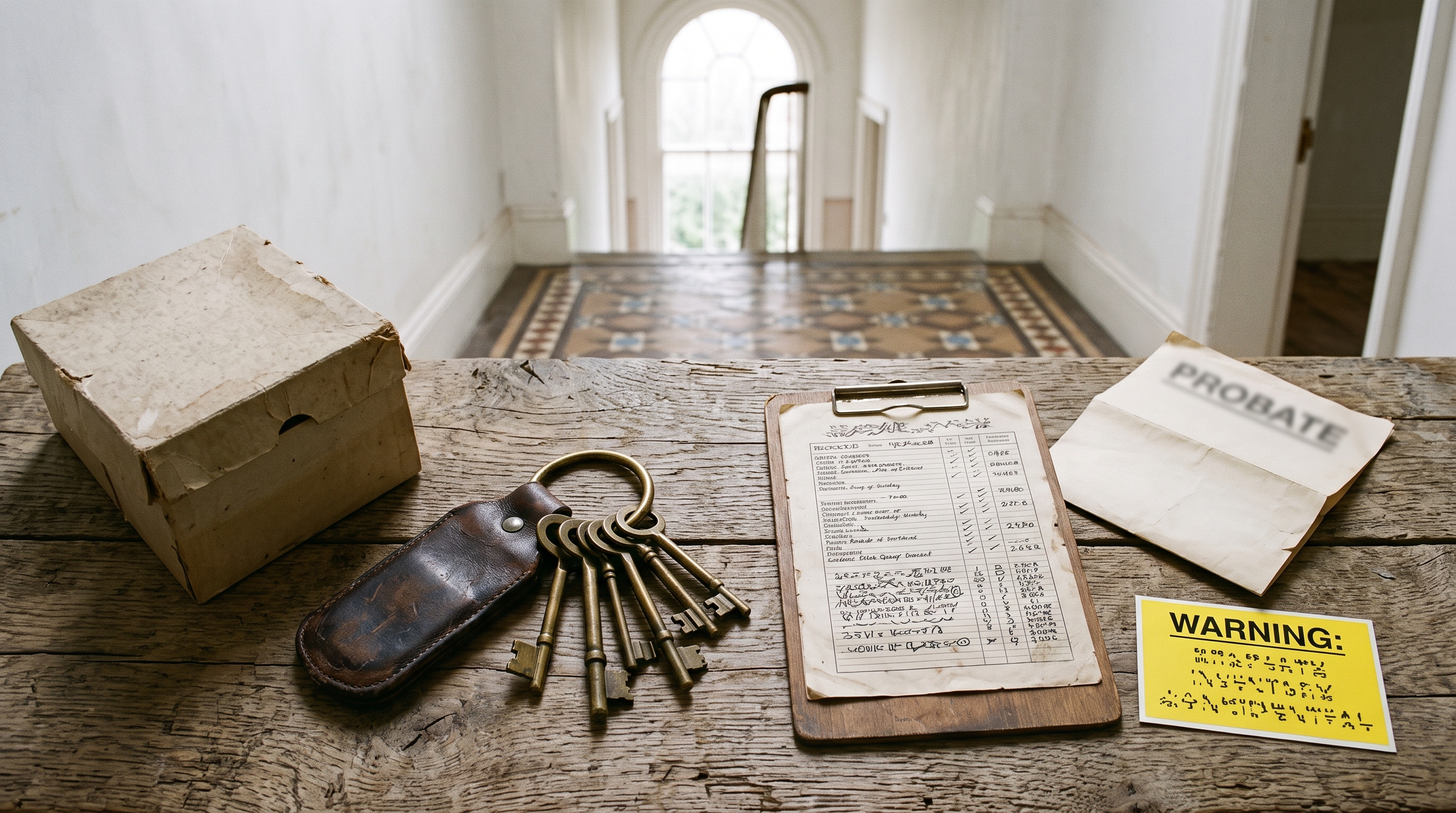
Inherited a Property in Liverpool? Here's What to Do With the Contents
Dealing with a loved one's belongings after probate is emotionally draining — and there's a legal side most families don't realise until it's too late. This guide tells you exactly what to keep, sell, donate, and legally remove, without exposing yourself to fly-tipping liability, an unexpected HMRC query, or a Council Tax bill you don't have to pay.
- Your Legal Position: Duty of Care
- Council Tax Exemption You May Not Know About
- Don't Rush the Clear-Out
- What to Do With Different Categories of Contents
- HMRC Valuation Warning
- White Goods and WEEE Items
- How to Spot an Unlicensed Carrier
- Getting Quotes in Liverpool
- The Process: Step by Step
- What a Licensed Company Will and Won't Do
- Frequently Asked Questions
Before You Clear Anything — Understand Your Legal Position
As the executor or beneficiary of an estate in Liverpool, you are responsible for what happens to the contents of that property. This includes how waste is removed. Under Section 34 of the Environmental Protection Act 1990, the Householder Duty of Care applies: if you hand waste to a carrier who then fly-tips it on a Liverpool side street or open land in Merseyside, you can be held liable — even if you had no knowledge of the dumping.
Hiring an unregistered "van man" to clear a deceased relative's property is one of the most common causes of fly-tipping in Merseyside. If that person dumps the waste illegally, councils can trace the load back to the original property — and to you. Always verify a waste carrier's licence before handing over a single bag.
The check takes 30 seconds. Every legitimate clearance company in Liverpool must hold an Environment Agency Upper Tier Waste Carrier Licence. Verify any licence number at the EA's public register at environment.data.gov.uk before signing anything.
Council Tax Exemption You May Not Know About
Before spending anything on the clearance itself, check whether the property qualifies for a Council Tax exemption. Most families in Liverpool miss this entirely.
A property left empty following the death of the sole occupant is exempt from Council Tax from the date of death until probate is granted, and for up to six months afterwards. Apply through your relevant local authority — Liverpool City Council, Sefton, Wirral, Knowsley, and St Helens each operate their own application process. This exemption can save the estate £150–£300 or more. It is not applied automatically — you must apply for it.
If the estate contains multiple properties, or if probate is contested, take advice from the estate solicitor on how the exemption interacts with the overall estate valuation.
Step One: Don't Rush the Clear-Out
The impulse to "get it done" is understandable, but a rushed clearance almost always costs more money and misses items of genuine value. Before any removal company sets foot in the property, spend at least one full day walking through every room with a notepad and phone camera.
What are you cataloguing?
- Documents and paperwork — original wills, title deeds, premium bonds, NS&I certificates, pension documents, and bank books. These can be buried in drawers, filing cabinets, or inside books.
- Jewellery and watches — even pieces that look costume can be hallmarked silver or gold. Check for hallmarks before any disposal.
- Cash — older relatives frequently kept cash at home in envelopes, tins, or stuffed inside books.
- Antiques and collectibles — local auction houses such as Cato Crane in Liverpool offer free probate valuations for items that may be worth selling.
What to Do With Different Categories of Contents
Once you've catalogued the property, everything falls into one of five categories. Working through each one methodically will reduce the volume you pay to clear.
| Category | What Belongs Here | Best Action |
|---|---|---|
| Keep / Inherit | Items with sentimental or probate value — jewellery, family photos, documents | Remove before clearance crew arrives |
| Sell | Furniture, antiques, electrical items in working order, tools, collectibles | Facebook Marketplace, Cato Crane auction, car boot sale |
| Donate | Clothing, bedding, kitchenware, books, small furniture in good condition | British Heart Foundation, Emmaus Merseyside, Age UK Liverpool |
| Recycle | White goods, WEEE items (TVs, fridges, washing machines, monitors) | Must be handled separately — see WEEE section below |
| Clear | Broken furniture, general rubbish, items with no reuse value | Licensed clearance company only |
HMRC Valuation Warning — Read Before You Clear
This is the step most guides skip entirely, and it can have real financial consequences for the estate.
HMRC can challenge the Inheritance Tax (IHT) valuation of an estate if chattels (movable possessions) are disposed of before a professional valuation has taken place. Arrange a probate valuation through a RICS-accredited valuer or a reputable auction house before clearing anything that could reasonably be classed as an antique or collectible.
There is also a less-known relief worth mentioning: if a chattel is sold within four years of the deceased's death for less than the probate valuation, the executors can claim a "loss on sale" relief to reduce the IHT already paid on that item. Keep all sale records from the clearance process.
This is particularly relevant for older Liverpool properties in areas like Toxteth, Aigburth, and Mossley Hill, where pre-war furniture, Victorian ceramics, and mid-century items are commonly found and frequently underestimated in value.
White Goods and WEEE Items — A Common Mistake
Fridges, freezers, washing machines, tumble dryers, televisions, and monitors are classified as Waste Electrical and Electronic Equipment (WEEE) under UK regulations. They cannot legally be dumped in a skip alongside general household waste, and cannot be taken to a household waste recycling centre (HWRC) in commercial quantities.
Note also: asbestos was used in UK construction until 1999 — not 1985 as is commonly stated. Many Liverpool properties built in the 1980s and some into the 1990s may contain Artex ceilings, pipe lagging, or floor tiles with asbestos content. Commission a survey before any clearance or refurbishment works begin in any pre-2000 property.
Red Flags: How to Spot an Unlicensed Carrier
Not every van offering clearance services in Liverpool is operating legally. Before handing over keys or cash, watch for these warning signs:
- Cannot or will not provide an Environment Agency waste carrier licence number
- Quotes a price significantly below every other company without explanation
- Requests cash payment only and will not provide a written quote or receipt
- Cannot name the facility where waste will be disposed of
- Refuses to provide a Waste Transfer Note after the job
- No business address, website, or verifiable online presence
If any of these apply, walk away. The legal risk of using an unlicensed carrier vastly outweighs any saving on the quote.
Getting Quotes for a Full or Partial House Clearance in Liverpool
House clearance pricing in Merseyside is driven by four variables: volume of items, access to the property, whether hazardous items are present, and the carrier's distance from the site. No legitimate company will give you an accurate price without seeing photos or visiting the property first.
Three-bedroom terraced house, Wavertree, Liverpool
Contents: Full furniture throughout, kitchen appliances, clothing, general accumulated items. Antiques removed prior to clearance following probate valuation. Two white goods to remove.
- Volume estimate: Full van load + partial second load
- Clearance time: approximately 4–6 hours with 2-person crew
- Price range from licensed Liverpool carriers: £380–£650
- Council bulky waste alternative: not available at this volume — council services are per-item only
Post the job once on JunkBid and licensed carriers in the area quote directly — rather than spending time calling each company individually.
The Process: How to Clear an Inherited Liverpool Property the Right Way
- Apply for the Class F Council Tax exemption immediately. Contact your relevant Merseyside local authority — Liverpool, Sefton, Wirral, Knowsley, or St Helens. The exemption is not automatic and must be applied for to take effect.
- Complete probate before any major clearance. Do not remove or dispose of items of potential value until the estate solicitor has confirmed probate is complete.
- Commission a probate valuation for antiques and collectibles. A RICS-accredited valuer or reputable local auction house (Cato Crane, Liverpool) can assess items for IHT purposes. Keep all sale records — they may be needed for loss on sale relief later.
- Walk the property and catalogue everything — photographs, room by room. This step always pays for itself in items found or clearance volume reduced.
- Arrange charity collections first. British Heart Foundation offers free home collections for furniture and electrical items in working condition across Merseyside. Book before the clearance date.
- Post the job and collect quotes from licensed carriers. Each company must provide their Environment Agency waste carrier licence number. Verify it at environment.data.gov.uk before confirming.
- Obtain a Waste Transfer Note (WTN). A WTN is the legal document recording the transfer of waste from you to the carrier. Keep it with the estate paperwork.
What a Licensed Clearance Company Will (and Won't) Do
- Remove all agreed items from inside the property, including upstairs rooms
- Dispose of general waste at a licensed facility
- Separate WEEE and white goods for compliant recycling
- Provide a Waste Transfer Note confirming legal disposal
- Leave the property in a cleared, swept condition
What they will not typically include without separate discussion:
- Removal of asbestos (requires a specialist — relevant for any pre-2000 property)
- Removal of gas cylinders or hazardous chemicals
- Deep cleaning after clearance (a separate service)
- Removing fitted kitchens or built-in wardrobes (often quoted as additional work)
Frequently Asked Questions
Do I need to be present during a house clearance in Liverpool?
Not necessarily, but it is strongly advisable for the first visit. You need to confirm what is and is not being cleared, and the crew may have questions about specific items. If you cannot attend, appoint a trusted representative and provide written instructions to the company.
Is there a Council Tax exemption for inherited properties in Liverpool?
Yes. A Class F Council Tax exemption applies from the date of death until probate is granted, and for up to six months afterwards. Apply through your relevant local authority — Liverpool City Council, Sefton, Wirral, Knowsley, and St Helens each have their own application process. The exemption is not applied automatically.
Can I use a skip instead of a clearance company?
You can, but a skip on a public road in Liverpool requires a permit from Liverpool City Council. Skips cannot take WEEE items, hazardous waste, or certain building materials, and all loading is your responsibility. For full house clearances, a licensed clearance crew is almost always more practical and cost-effective.
Can clearance items offset the cost of the job?
Some clearance companies will offset saleable items against their fee. Confirm where the items will go, and ensure this does not conflict with the estate's probate valuation process.
What licence does a waste carrier need in Liverpool?
Anyone transporting controlled waste for business purposes in England must hold an Upper Tier Waste Carrier Licence issued by the Environment Agency. Always verify the licence number at environment.data.gov.uk before confirming a booking.
Related guides
Liverpool & Merseyside · Free · No obligation
Ready to Clear the Property?Post the job once — licensed local companies send you competing quotes.
No upfront cost · Licensed carriers only · Environment Agency verified