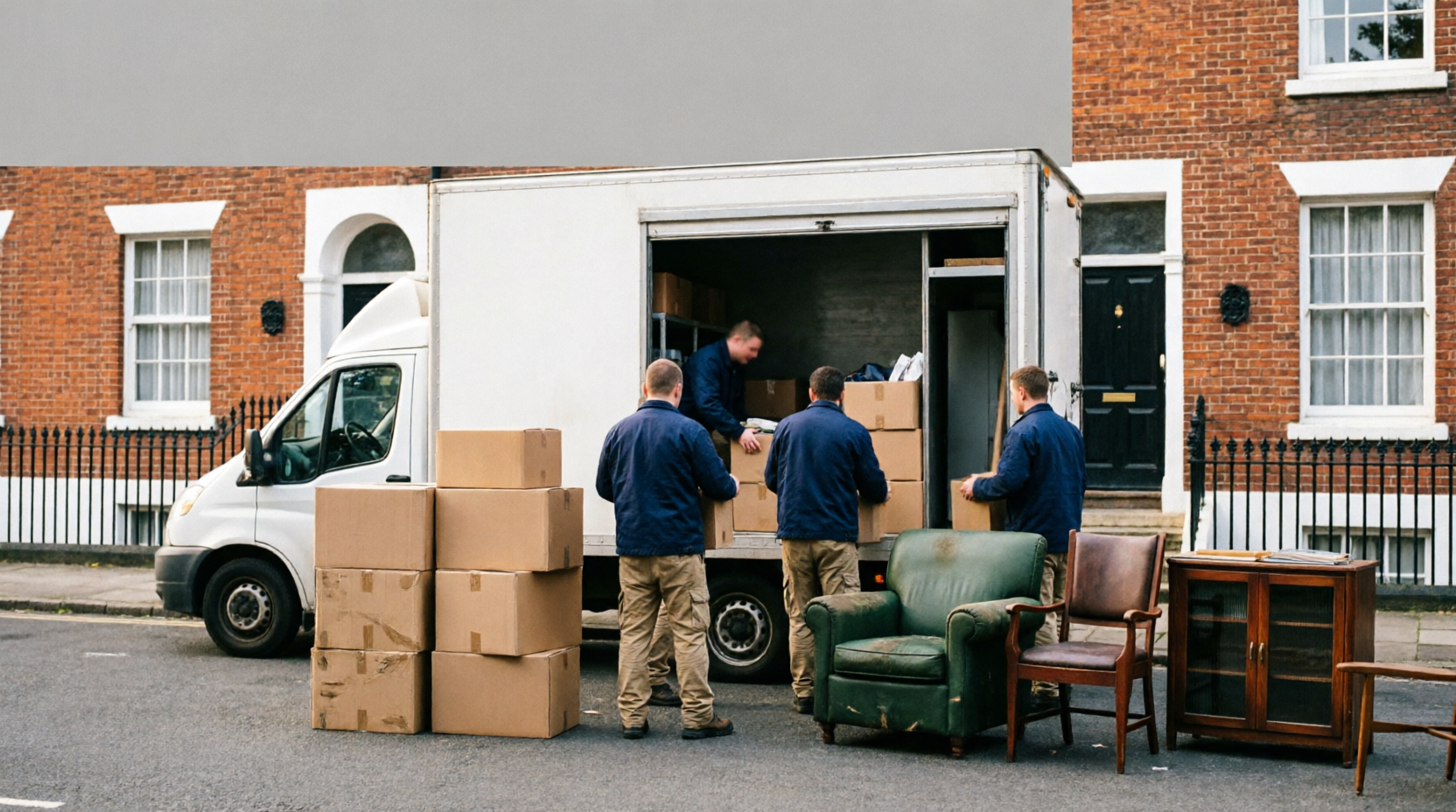
What Happens to Your House Clearance Items? Where Does It All Go?
Most people book a house clearance, wave goodbye to the van, and never think about it again. Which is fair enough — that's the point. But a question that comes up more often than you might expect is: where does everything actually go?
It's a reasonable thing to want to know. You're handing over a lifetime's worth of furniture, appliances, clothing, and odds and ends to a company you may never have used before. Understanding what happens next isn't just idle curiosity — it's also relevant to your legal responsibilities as the person who generated the waste.
This guide explains the journey your items take after a licensed clearance company drives away, from re-use and recycling through to what ends up at the tip — and why the licence your clearance company holds determines which of those routes is available to them.
Stage One: Sorting on the Day
The sorting process starts immediately — often in your home, and continuing at the company's vehicle or yard. Experienced clearance teams are fast at identifying what falls into each category, and they'll typically separate items as they load.
The four broad destinations are:
Furniture, appliances, clothing, books, and household goods in sellable condition. Goes to charity shops, second-hand dealers, or resold directly.
Metal, wood, cardboard, glass, and certain plastics. Taken to licensed recycling facilities or scrap merchants.
Fridges, freezers, TVs, mattresses, tyres, and hazardous materials. These require specific handling under UK regulations.
Items that can't be re-used, recycled, or specially processed. A responsible operator minimises this category.
What Gets Re-Used or Resold
This is the best outcome for any item — it stays in use, avoids the waste stream entirely, and often benefits someone who genuinely needs it.
Clearance companies typically have established routes for re-usable goods:
- Charity shops — furniture, clothing, books, kitchenware, and small electricals in working order are commonly donated to or collected by organisations like the British Heart Foundation, Age UK, and local Liverpool charities.
- Second-hand dealers and house clearance shops — items with re-sale value (vintage furniture, antiques, tools, quality appliances) may be sold on by the clearance company or passed to a dealer.
- Online resale — some operators list higher-value items on Facebook Marketplace or eBay before or after a clearance.
- Community networks — Freecycle, community Facebook groups, and local organisations may receive items that don't fit the charity shop route.
What Gets Recycled
The UK has extensive infrastructure for recycling common household materials, and a licensed clearance company will have access to approved facilities for most of these.
| Material | Where it goes |
|---|---|
| Metal (steel, aluminium, copper) | Scrap metal merchants — also has commercial value, so operators are motivated to separate it |
| Wood and timber | Wood recycling centres; some goes to biomass energy |
| Cardboard and paper | Paper recycling mills |
| Glass | Glass recycling; condition and colour determine route |
| Plastics | Varies significantly by type; some plastics have no viable recycling route and go to landfill |
| Textiles | Textile banks or specialist recyclers if not suitable for re-use |
Items That Need Specialist Disposal
Certain items can't simply be taken to a standard recycling centre or landfill site. They require specific handling, either because of the materials they contain or because of UK environmental regulations.
Fridges and freezers
These contain refrigerant gases that are harmful to the ozone layer. They must be processed at an approved Waste Electrical and Electronic Equipment (WEEE) facility, where the gases are safely extracted before the metal casing is recycled. A licensed clearance company will have access to this route — an unlicensed one often won't, which is why fridges appear disproportionately often at fly-tipping sites.
Televisions and monitors
Old CRT TVs contain lead and other hazardous materials. Flat screens contain various components that require WEEE processing. These can't go in a skip or standard landfill.
Mattresses
Mattresses are one of the most problematic items in the waste stream — they're bulky, difficult to compact, and can't be recycled through standard routes. Specialist mattress recyclers exist and can separate the steel springs, foam, and fabric for recycling. The cost of proper mattress disposal is one reason why fly-tippers frequently target them.
Upholstered furniture (sofas, armchairs, padded seating)
This is a less well-known but important one. Many older sofas, armchairs, and padded chairs contain foam treated with flame retardants that fall under the UK's Persistent Organic Pollutants (POPs) regulations. Under Environment Agency guidance, upholstered domestic waste containing POPs must be sent to high-temperature incineration facilities — it cannot go to standard landfill or be re-sold. This applies even if the item looks perfectly usable.
In practice, this means a licensed clearance company will separate upholstered seating from the general waste stream and route it to an approved facility. An unlicensed operator is unlikely to handle this correctly — which is one reason why sofas are among the most commonly fly-tipped items in Merseyside.
Hazardous materials
Paint, solvents, asbestos, and certain cleaning products require specialist disposal routes. A reputable clearance company will identify these and handle them correctly — or advise you to dispose of them separately through your local council's hazardous waste service before the clearance takes place.
What Actually Goes to Landfill
Despite what some companies claim in their marketing, not everything from a house clearance can be recycled or re-used. Landfill is the last resort for items that have no viable alternative route — severely damaged goods, heavily contaminated materials, or composites that can't be separated.
A responsible operator minimises this, but some landfill is an honest and unavoidable part of most clearances. Be wary of any company claiming 100% landfill diversion — it's rarely accurate for a full house clearance that includes worn, broken, or mixed-material items.
How to Know Your Items Were Disposed of Properly
You're entitled to ask for a waste transfer note from your clearance company. This is a legal document — required under the duty of care regulations — that records what waste was removed, where it was taken, and confirms the company's licence details.
Not every company offers this without being asked. Ask for it. It gives you a paper trail if questions ever arise about how your waste was handled, and it's a good indicator of whether you're dealing with a professional operation.
- Can you provide a waste transfer note?
- What's your approximate recycling and re-use rate?
- How do you handle fridges, mattresses, and electricals?
- Which waste facilities do you use?
The Licence Question: Why It Determines Everything
An Upper Tier Waste Carrier Licence, registered with the Environment Agency, is not just a piece of paper. It's the gateway to legal waste disposal routes. Licensed operators can legally transport waste to permitted facilities — transfer stations, licensed tips, WEEE processors, and recycling centres. Unlicensed operators cannot.
When an unlicensed "man with a van" takes your items away cheaply, the economics only work if they cut corners on disposal. That typically means fly-tipping, or taking items to a domestic tip using a residential permit — which is illegal for commercial waste. The person who generated the waste — you — can be implicated.
You can verify any waste carrier licence at environment.data.gov.uk. It takes about thirty seconds. All providers on JunkBid are Upper Tier licence-verified before being listed.
For more on the risks of unlicensed clearance, see our guide: That Cheap "Man With a Van" Could Cost You Thousands — The Fly-Tipping Trap Explained.
Every company on JunkBid holds a verified Upper Tier Waste Carrier Licence. Post your clearance job once and receive competing quotes — no obligation, no upfront cost.
Get free quotes →Frequently Asked Questions
Can I request that specific items go to charity?
Yes — mention it when booking. Most clearance companies have existing relationships with charity shops and can direct specific items there if they're in suitable condition. They can't guarantee a particular charity will accept every item, but they can make the effort.
What's a waste transfer note and do I need one?
A waste transfer note is a legal document confirming that waste has been transferred from you to a licensed carrier. You're legally required to keep a copy for two years under duty of care regulations. Ask your clearance company to provide one — any licensed operator should do this as standard.
Does a clearance company keep anything valuable they find?
This depends on the company's terms and what you've agreed. Most clearance contracts make clear that items not specifically excluded belong to the clearance company once collected — which is partly how they can offer lower prices when there are re-saleable goods. If you think something has value, remove it before the clearance or discuss it with the company beforehand.
What happens to electricals like old TVs and white goods?
They should go to a registered WEEE (Waste Electrical and Electronic Equipment) facility, where hazardous components are safely extracted and materials recycled. Confirm this with your clearance company — particularly for fridges, freezers, and old CRT televisions.
Can I ask for a breakdown of where my items went?
You can ask, though most companies won't provide a detailed item-by-item breakdown. What you should expect is a waste transfer note covering the overall waste removed, and general information about which facilities they use. A reputable company will answer these questions openly.
Planning a house clearance in Liverpool or Merseyside?
JunkBid connects you with licence-verified local clearance companies who compete for your job.
Get free competing quotes →