Which Charities Do House Clearance in Liverpool & Merseyside? (And What They Won't Take)
If you're clearing out a house — whether after a bereavement, a downsizing move, or simply a long-overdue declutter — your first thought might be: "Surely a charity will take all of this for free?"
It's a reasonable assumption. There are wardrobes full of clothes, a perfectly good sofa, stacks of crockery, maybe even a working washing machine. Surely someone wants it all?
The reality, unfortunately, is more complicated. Charities across Liverpool and Merseyside do collect furniture and household goods — and some even offer full house clearance services. But every single one of them has strict rules about what they can and cannot accept. And the biggest dealbreaker surprises almost everyone: the fire safety label on your sofa.
This guide walks you through exactly which charities operate in Liverpool and Merseyside, what they'll happily collect, what they'll refuse at your front door, and what to do with everything that's left over.
Why Charities Can't Just "Take Everything"
Before we get into specific organisations, it's worth understanding why charities are so selective. It's not fussiness — it's the law.
Under the Furniture and Furnishings (Fire) (Safety) Regulations 1988, any upholstered furniture sold or given away in the UK must carry a permanent fire safety label. This applies to sofas, armchairs, padded dining chairs, mattresses, and divan beds. Without that label, charities are legally unable to resell or redistribute the item.
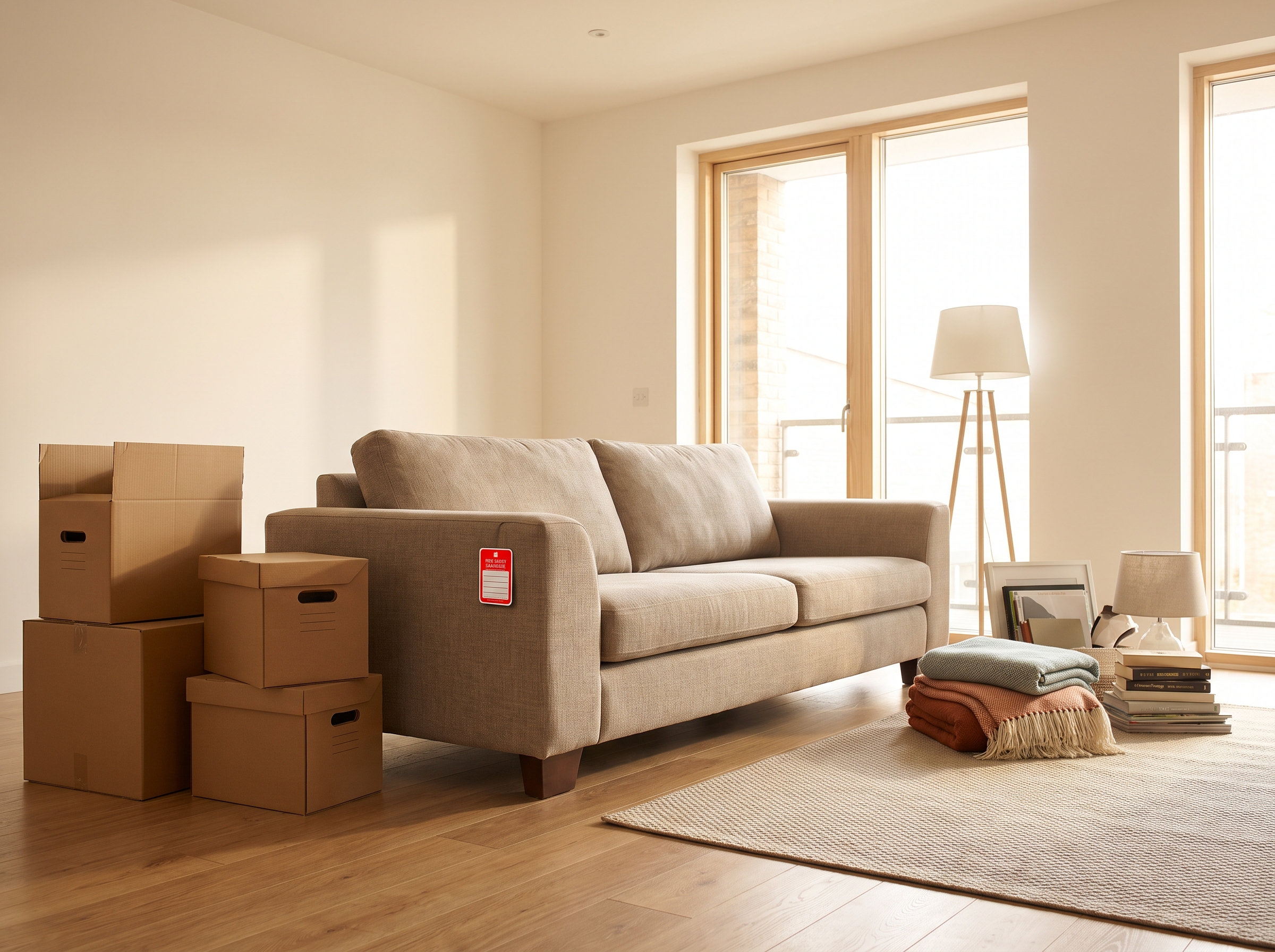
The fire label rule catches people out constantly. That 5-year-old sofa in great condition? If someone cut off the label (or it fell off during a move), no charity in the UK can legally take it. It doesn't matter how clean or functional it is — without the label, it's unsellable.
Beyond fire labels, charities also refuse items that are stained, ripped, broken, or simply unsellable. They run on tight margins and volunteer labour. Every item they collect has to either generate revenue in their shops or go directly to someone in need. Items that can't be sold become a disposal cost — and most charities simply can't absorb that.
Charities That Collect Furniture in Liverpool & Merseyside
Here are the main organisations operating locally that offer free furniture collection or house clearance services:
British Heart Foundation (BHF)
The BHF is the biggest name in charity furniture collection across the UK. They operate furniture and electrical stores throughout Merseyside, including in Tuebrook. They'll collect sofas, beds, wardrobes, dining tables, and working electrical goods — all free of charge.
However, the BHF is strict on condition. Every upholstered item must have its fire safety label intact. No rips, no stains, no exposed inner fabric. Their van crews will assess items at the door and will refuse anything that doesn't meet their standards. Collection slots can fill up quickly — expect to wait a week or more during busy periods.
St Joseph's Hospice
A Liverpool institution. St Joseph's runs charity shops across Liverpool and Sefton, and their retail team offers a full house clearance service covering the Liverpool and Sefton areas. They'll go into a property and clear everything room by room, keeping anything they can sell in their shops and recycling what they can't.
This is one of the most comprehensive charity clearance services in the area — particularly valued by families clearing a home after a bereavement. The service is free, though the same fire label and condition rules apply to upholstered items.
Claire House Children's Hospice
Claire House offers free furniture collection across Liverpool, the Wirral, and Cheshire. Items must be in resaleable condition, and all upholstered furniture requires a fire label. They're a great option if you have good-quality pieces and want your donation to support children's palliative care locally.
Emmaus Merseyside
Based in Merseyside, Emmaus runs a Charity Superstore and offers free collection of good-quality furniture. Their model is slightly different — they're a social enterprise that supports people who've experienced homelessness. You can book a collection online or drop items off directly. They can only collect smaller items alongside larger furniture pieces.
The Salvation Army
The Salvation Army collects donated furniture in some parts of the UK, though availability varies by local branch. Use the search tool on their website to check whether your nearest branch offers a collection service. Where available, collections are free for furniture in good condition.
Liverpool Council — Bulky Item Collection
Not a charity, but worth mentioning: Liverpool City Council runs a free bulky item collection service for residents through its "Bulky Bobs" programme. This is specifically for items you need removed — it won't generate charity shop value, but it's a free, legitimate disposal option for items charities won't accept.
Important: The council service is not a house clearance. It's for individual bulky items. If you're clearing an entire property, you'll still need a charity, a private clearance company, or a combination of both.
What Charities Will and Won't Accept: The Full Breakdown
This is where most people get caught out. Here's a realistic picture of what charities in Liverpool and Merseyside will typically collect — and what they'll leave behind.
| Item | Charity Will Collect? | Key Condition |
|---|---|---|
| Sofa / armchair | Yes — if fire label attached | No rips, stains, or exposed filling |
| Mattress | Yes — if fire label (BS7177) present | Clean, no stains, structurally sound |
| Wardrobe / chest of drawers | Yes | Structurally intact, no major damage |
| Dining table & chairs | Yes | Stable, no broken legs or peeling veneer |
| Working fridge, washing machine | Sometimes | Must be PAT-tested; some shops only |
| Sofa without fire label | No — refused by law | Cannot be resold legally in the UK |
| Stained / ripped upholstery | No | Even with fire label, condition must be good |
| Broken electrical items | No | Safety liability; can't be resold |
| Duvets, pillows | No | Hygiene reasons — universally refused |
| Built-in furniture / fitted wardrobes | No | Can't be removed without damage |
| Paint, chemicals, hazardous waste | No | Requires specialist disposal |
| General household rubbish | No | Charities are not waste disposal services |
The Fire Label: Where to Find It and Why It Matters
The fire safety label is the single biggest reason charities refuse furniture during a house clearance. So where do you actually find it?
On sofas and armchairs, the permanent fire label is usually sewn into one of these places:
- Under the seat cushions
- Stitched into the seam underneath the furniture
- On the underside of the frame
The label itself typically starts with the phrase "Carelessness causes fire" and references the Furniture and Furnishings (Fire) (Safety) Regulations 1988. On mattresses and divan beds, look for a blue label on the sidewall referencing BS7177.
Quick tip: If you're buying new furniture now and think you might donate it in future, never cut off the fire safety label. It's the difference between a valuable donation and something no charity can legally accept.
The Realistic Gap: What Charities Leave Behind
Here's what most people don't realise until they're standing in a half-cleared house: even in the best-case scenario, charities typically take only the sellable items from a property. That might be 30–40% of what's actually in the house.
What's left behind is everything else — the sofa without a label, the stained mattress, the broken bedside table, boxes of paperwork, bags of clothes that aren't in good enough condition for a charity shop, kitchen odds and ends, garden waste, and general household rubbish. That leftover pile is usually the bigger, harder, and more expensive part of a clearance.
This is the point where many families find themselves stuck. The charity has collected the good stuff. The house is still half-full. And now they need to find (and pay for) a private clearance company to handle everything else.
Need help clearing what charities can't take?
On JunkBid, licensed clearance companies in Liverpool & Merseyside compete to quote on your job — so you get fair prices without the guesswork. Every company is Waste Carrier Licensed and verified.
Get Free Quotes →A Practical Strategy: Combine Charity + Private Clearance
The most cost-effective approach to clearing a full property usually involves using both options strategically. Here's a step-by-step process that works:
- Walk through the property first. Before contacting anyone, go room by room and sort items into three categories: charity-ready, potentially valuable (for resale or auction), and everything else.
- Check fire labels on every upholstered item. This single step saves you the frustration of booking a charity collection only to have items refused at the door.
- Book charity collections for qualifying items. Contact BHF, St Joseph's, or Claire House — whoever can collect soonest. Be honest about item condition to avoid wasted trips.
- Get quotes for the remainder. Once you know what the charities have taken, you'll have a clear picture of what's left. Get competing quotes from licensed clearance companies for the rest.
- Consider timing carefully. If you're clearing a property for sale, coordinate the charity pickup and private clearance close together to minimise the number of visits and the time the house sits half-cleared.
Why this approach saves money: By donating the good items to charity first, you reduce the volume that needs professional clearance — which means a smaller van load, a lower quote, and less going to landfill. A full van load might cost £300–500, but a half van load after charity donations could come in at £150–250.
What About "Free House Clearance" Services?
You might see adverts for "free house clearance" from private companies. These do exist, but they typically work on the same principle as charities — they'll clear a property for free only if the value of sellable items covers their costs. A house full of antique furniture and quality appliances might qualify. A typical house clearance with a mix of good, average, and worn-out items almost certainly won't.
If a company is offering a completely free clearance with no conditions, be cautious. Ask for their Waste Carrier Licence number and verify it on the Environment Agency register. Unlicensed operators sometimes offer "free" clearances and then fly-tip the contents illegally — and under UK law, you as the waste producer can be held responsible.
Never hand over your household waste to an unlicensed operator. If they dump it illegally, you — not them — face the fine. Always ask for a Waste Carrier Licence number and check it at environment.data.gov.uk before agreeing to anything.
Frequently Asked Questions
Will the British Heart Foundation clear an entire house?
The BHF primarily collects individual furniture and electrical items, not full house clearances. They'll take qualifying pieces (with fire labels, in good condition), but they won't clear an entire property. For a full clearance service in Liverpool, St Joseph's Hospice is more suited — or you'll need a private clearance company for everything else.
Can I get a completely free house clearance from a charity?
It depends on what's in the house. Some charities (like St Joseph's Hospice) will clear a property for free, but they keep sellable items for their shops and will leave behind anything that can't be resold. In practice, you'll almost always need to arrange separate disposal for what remains.
My sofa is in perfect condition but the fire label is missing. What can I do?
Unfortunately, no charity can legally accept it. Your options are: offer it privately through Gumtree or Facebook Marketplace (private sales between individuals aren't covered by the same regulations), use Liverpool Council's bulky item collection, or include it in a professional clearance. Licensed clearance companies on JunkBid can handle items regardless of label status.
How long do charity collections take to arrange?
The BHF typically has a wait time of one to two weeks. Local charities like Claire House or St Joseph's may be quicker, depending on volunteer availability. If you're working to a deadline — for example, a property sale completion date — factor this into your planning or consider preparing for a combined approach early.
Do charities collect clothes, books, and small items?
Most charities prefer you drop smaller items (clothes, books, kitchenware) at their shops rather than requesting a home collection. Collections are generally reserved for furniture and large items that are difficult to transport yourself. Check with your nearest charity shop for drop-off hours.
What's the best charity to donate furniture to in Liverpool?
It depends on what you're donating and where you are. For large furniture and electrical items across Merseyside, the BHF has the widest reach. For a full house clearance in Liverpool or Sefton, St Joseph's Hospice offers the most comprehensive service. For the Wirral and Cheshire, Claire House is the best local option. Emmaus Merseyside is another strong choice for good-quality furniture.
Got Items Charities Won't Take? Get Quotes in Minutes
On JunkBid, licensed clearance companies compete for your job — so you get the best price, not the first price. Every provider is Waste Carrier Licensed and verified.
GET FREE CLEARANCE QUOTES →