What Items Can't Be Taken During a House Clearance
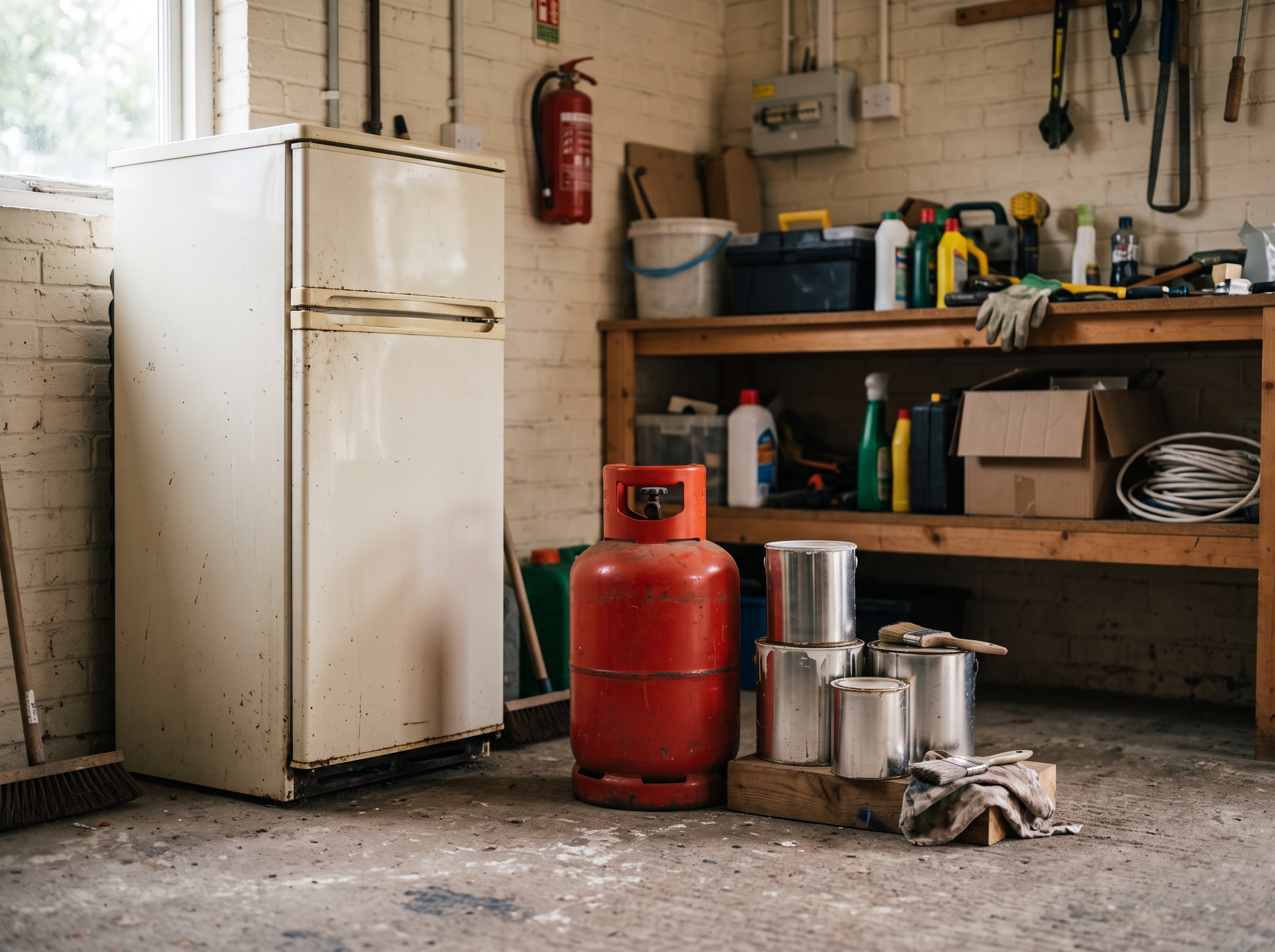
Most of what fills a house — furniture, boxes, general clutter, old appliances — is straightforward for a licensed clearance company to remove. But not everything is. Certain items are legally restricted, require specialist disposal, or simply aren't covered by a standard clearance quote — and finding this out on the day, rather than before, is one of the most common causes of delays and unexpected costs.
This guide covers exactly what falls into that category, why, and what to do with it instead.
Quick summary: Fridges, freezers, gas canisters, chemicals, asbestos, and certain electricals require specialist handling and aren't included in a standard clearance. Flagging these upfront means your quote is accurate and there are no surprises on the day.
Why Some Items Are Restricted
It comes down to UK waste regulations. Certain materials are classified as hazardous waste or require specific handling under environmental law — meaning a general Upper Tier Waste Carrier Licence doesn't automatically cover them. Some items need a separate hazardous waste registration, others need to go through a specific recycling stream (like fridges, which contain refrigerant gases), and a few simply can't be legally disposed of through general waste channels at all.
A licensed, professional clearance company will know this and flag it. An unlicensed "man with a van" often won't — which is exactly the kind of gap that leads to items being illegally dumped rather than properly processed. We cover the legal risk of that in our guide on fly-tipping in the UK.
Items That Need Special Handling
Fridges, Freezers & Air Conditioning Units
These contain refrigerant gases (and in older units, potentially ozone-depleting substances) that must be safely extracted before the appliance can be recycled. Under WEEE (Waste Electrical and Electronic Equipment) regulations, they can't simply be crushed or landfilled like general waste. Most clearance companies can still take them — but they need to know in advance, since they typically go through a separate recycling route and may carry a small additional charge.
Gas Canisters and Pressurised Containers
Camping gas canisters, old propane bottles, aerosols, and fire extinguishers are a fire and explosion risk if handled incorrectly. These generally cannot go in a standard clearance load and need to be taken to a specific hazardous waste facility, or in some cases returned to the supplier.
Paint, Chemicals & Garden Pesticides
Old tins of paint, weed killer, pesticides, motor oil, and household chemicals are classified as hazardous waste. Councils typically accept small household quantities at a Household Waste Recycling Centre, but a standard clearance team usually cannot take them as part of a general load.
Asbestos-Containing Materials
Common in older properties — particularly in garages, sheds, garage roofing, old boiler flues, and some floor tiles from properties built before the early 1980s. Asbestos requires specialist licensed removal under strict regulations, because disturbing it can release dangerous fibres. If you suspect a property contains asbestos, flag it before booking and don't attempt to move or break up the material yourself.
Certain Large Electricals
TVs, computer monitors, and some large appliances fall under WEEE regulations and need to go through approved recycling channels rather than general waste. Most clearance companies handle this routinely, but it's worth confirming, particularly for older CRT televisions and monitors, which contain materials requiring extra care.
Quick Reference Table
| Item | Why it's restricted | What to do |
|---|---|---|
| Fridges / freezers | Contain refrigerant gases | Flag in advance — most companies take these with notice |
| Gas canisters | Fire / explosion risk | Hazardous waste facility or supplier return |
| Paint & chemicals | Classified hazardous waste | Household Waste Recycling Centre |
| Asbestos materials | Health risk if disturbed | Licensed asbestos removal specialist |
| Large electricals | WEEE recycling regulations | Usually fine with notice — confirm with provider |
What You Should Do Before Booking
- Walk through the property and note anything that might fall into a restricted category
- Mention it clearly in your job description when requesting quotes
- Take a photo if you're unsure whether something counts — providers can usually tell you quickly
- Ask your local council about Household Waste Recycling Centre opening times if you need to take chemicals or paint yourself
- For suspected asbestos, don't move or disturb it — get advice from a specialist before anyone touches it
⚠️ Don't assume "the van will just take it." Turning up on the day with unflagged hazardous items is one of the most common causes of price disputes and delays. A quick mention at the quote stage avoids this entirely.
What Clearance Companies Generally Won't Touch at All
- Clinical or medical waste
- Explosives or ammunition
- Unlabelled or unidentified chemicals
- Large quantities of asbestos (requires a licensed specialist, not a general clearance company)
For these, you'll need a specialist contractor rather than a standard house clearance provider. Your local council can usually point you toward an approved specialist if you're unsure where to start.
Frequently Asked Questions
Will a clearance company refuse the whole job if I have one restricted item?
No — in almost all cases they'll simply exclude that specific item from the load and explain what to do with it separately. The rest of the clearance goes ahead as normal.
Does it cost extra to have a fridge or freezer removed?
Sometimes, but usually only a small amount, since it needs to go through a separate recycling process. It's worth asking when you request your quote so there's no surprise on the day.
What if I'm not sure whether something is hazardous?
Mention it and take a photo when submitting your job. Licensed providers deal with this regularly and can tell you quickly whether it's something they can take or something that needs a specialist.
Can I take restricted items to the tip myself instead?
For many household chemicals and paint, yes — most Household Waste Recycling Centres accept small quantities from residents. For asbestos, gas canisters, or anything you're unsure about, check with your local council first, as some items need to be booked in or handled differently.
Not sure what your clearance company can and can't take?
Submit your job with photos and get an accurate quote first time.
GET FREE QUOTES NOW →No upfront cost · No obligation · Licensed companies only