
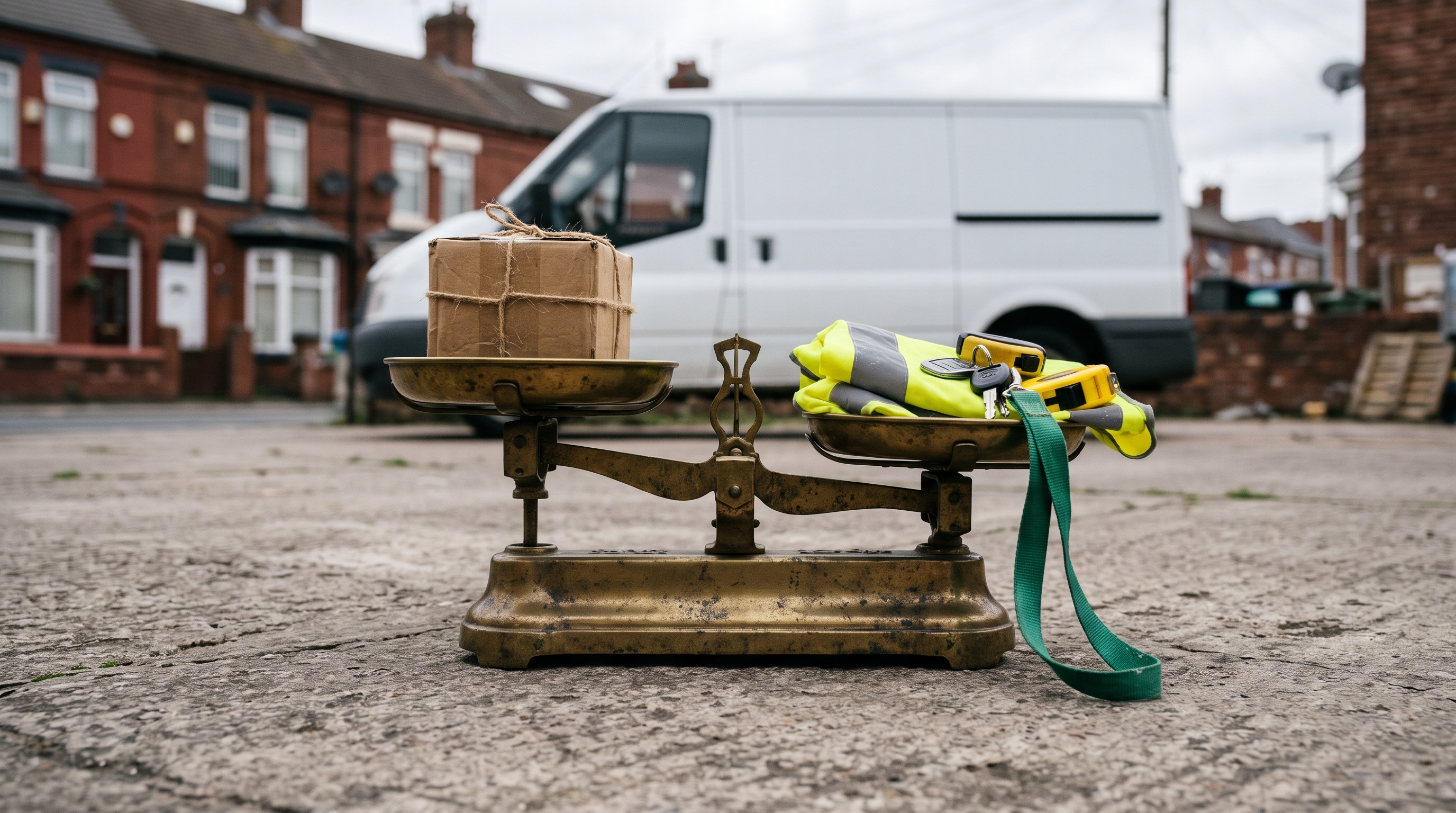
Council Bulky Waste Collection vs Private Clearance in Liverpool: Which Should You Choose?
Liverpool City Council collects up to five bulky items from outside your home for free. A garage, a loft or a whole house falls outside that service, and the wrong private carrier can leave you with a fixed penalty of up to £600. This guide sets the council's own rules against 2026 private prices, so you can choose a route in five minutes.
How Liverpool's council bulky collection works in 2026
Liverpool City Council runs a free bulky item collection for residents of the city. You request a collection online at liverpool.gov.uk, and the council gives you a date based on when its crews are next in your area, between 7.30am and 4.30pm. We checked the booking page and terms on .
- Cost: free, for Liverpool City Council residents only.
- Limit: up to five bulky items per property, plus up to five small electrical items and up to five bags of textiles. You cannot book a collection for textiles or small electricals alone: they travel with a booked bulky collection.
- Placement: leave items outside your home by 7am on collection day. The crew collects from inside only in exceptional circumstances, and you must never leave items in the alley, the passageway or on the public highway.
- Garages, sheds and back gardens: you must be present to accompany the crew.
- Flats: each flat needs its own booking.
- Changes: amend or cancel through the link in your confirmation email. If the collection is due within 24 hours, phone the council.
Prepare items the way the terms require: cover sofas and beds, store mattresses upright, roll and tie carpets with string, and dismantle bedframes and large tables where possible. The crew can refuse items that are soiled, infested or soaked, such as a rain-soaked mattress, and a failure to follow the terms can cancel your booking on or before the day.
What the council will not take
The terms list a long set of exclusions. They include batteries, baths, toilets, blinds, sheds, trampolines, sliding wardrobes, shower screens, kitchen worktops, range cookers, sun beds, swing sets, pianos, garden waste, liquids, gas cylinders and hazardous waste. House clearances are excluded outright, as are items at landlord or To Let properties and at business premises. The council points residents with excluded household items to the Otterspool and Old Swan recycling centres.
Check the list before you book. A household that books five items and then finds a sliding-door wardrobe among them loses a booking and waits for another date. Read the exclusions first, and count every bulky item, small electrical and bag of textiles.
Landlords and businesses cannot use the service at all. A landlord clearing a flat between tenancies, or a business clearing an office, needs a licensed carrier and a waste transfer note. See our guides for landlords and for commercial office clearance in Liverpool.
What private clearance covers and what it costs
A licensed private carrier prices the job by volume, access and contents. The crew collects from any room, the loft, a shed or the garden, loads the van and takes the waste to a licensed facility. Many carriers offer next-day or same-day slots: see same-day rubbish clearance in Liverpool.
| Job | Typical price | What it covers |
|---|---|---|
| Single bulky item | £40–£100 | Sofa, fridge, mattress or wardrobe |
| Single room or garage | £120–£300 | Partial clearance, one van load or less |
| Studio or 1-bed flat | £350–£550 | Full contents, 1–2 van loads |
| 2-bed house or flat | £450–£750 | Full contents, typically 2 van loads |
| 3-bed semi-detached | £600–£1,000 | Full contents, including loft and garage |
| 4-bed detached | £850–£1,400 | Multiple van loads, likely a 2-day job |
Our Liverpool house clearance cost guide breaks these ranges down by area and by what moves a quote up or down.
Check surcharges and VAT before you accept. The same guide lists surcharges of £20–£40 per fridge or freezer, £15–£35 per mattress and £10–£20 per TV or monitor. A headline price of £80 + VAT becomes £96 at the standard 20% rate, so ask every carrier for a fixed price that includes VAT.
Council vs private: the side-by-side comparison
| Feature | Council collection | Private clearance |
|---|---|---|
| Cost | Free for Liverpool City Council residents | £40–£100 (single item), £120–£300 (room or garage), £350–£1,400 (full house) |
| Item limit | 5 bulky items, plus 5 small electricals and 5 bags of textiles, per property | No limit; priced by volume |
| Where items are collected | Outside your home by 7am; inside only in exceptional circumstances; garage, shed or back garden needs you present | Any room, loft, shed or garden |
| Waiting time | No fixed time published; the date depends on when crews are next in your area | Often next-day or same-day, set by the carrier |
| Excluded items | Baths, toilets, sheds, sliding wardrobes, trampolines, pianos, range cookers, garden waste, liquids, gas cylinders, hazardous waste | Set by each carrier; confirm hazardous items and white goods in writing |
| House clearances | Excluded | Core service |
| Landlord and business properties | Excluded | Covered; a business should receive a waste transfer note |
| Who can book | Liverpool City Council residents only | Anyone in the carrier's service area |
| Legal paperwork | None: the council is the local authority | You check the Upper Tier licence and keep a receipt or waste transfer note |
Which route fits your job
Answer three questions and the choice usually settles itself.
1. How many items do you have?
Five bulky items or fewer, none on the exclusion list: book the council. More than five, or any full room, garage, loft or property: go private. Use the council for the odd sofa or mattress (see how to get rid of a sofa in Liverpool and how to get rid of a mattress in Liverpool) and a private carrier for everything else.
2. Do you have a deadline?
The council sets the date and publishes no fixed wait time. If the items must go this week, book a private carrier.
3. Can you put the items outside by 7am?
The crew collects what sits outside your home on the day. If the items are upstairs, in a loft or too heavy to carry, or you cannot be at home for a garage collection, a private carrier is the practical route.
The third route: Otterspool and Old Swan recycling centres
Liverpool has two household waste recycling centres, Otterspool and Old Swan. The council directs excluded household items there. You need your own transport and the strength to unload, and the sites do not accept commercial quantities, so a landlord or tradesperson clearing a property cannot use them as a free dump. Check opening hours and site rules at liverpool.gov.uk before you travel.
Your legal duty: the licence check that protects you
A council collection removes the legal question, because the council is the local authority. A private carrier puts the question on you. Section 34 of the Environmental Protection Act 1990 gives every householder a duty of care to hand waste only to an authorised carrier. If a carrier you hire fly-tips your waste, you can receive a fixed penalty of up to £600 nationally. Liverpool City Council applies £400, according to Liverpool Express (29 May 2025).
Fly-tipping carries heavier penalties. A council can issue an on-the-spot fixed penalty of up to £1,000 for small-scale fly-tipping, and a conviction in court brings an unlimited fine. Read what this costs homeowners in our guide to the unlicensed carrier trap.
Anyone who carries other people's waste needs an Environment Agency Upper Tier Waste Carrier Licence. A Lower Tier registration covers carrying your own waste only. Search the carrier's name or CBDU number on the Environment Agency public register before you book, or run the check through JunkBid's carrier verification. Our guide explains what a waste carrier licence is.
Electricals and hazardous items. Fridges, freezers and TVs count as WEEE (waste electrical and electronic equipment) and cannot go with general waste. Fridges also contain F-gas refrigerant that only certified operators may remove. Ask every carrier which WEEE-authorised facility takes the item, and read our guides to fridge and freezer disposal and TV disposal.
The council excludes batteries, liquids, gas cylinders and hazardous waste. Garage roofing and panels built up to 1999 can contain asbestos, because UK construction used it until 1999. Do not move or break them, and read what items a clearance cannot take.
Worked example: clearing an L19 garage
An Allerton garage: 18 bulky items, a sliding-door wardrobe and a trampoline
A household in L19 needs to empty a garage holding 18 bulky items (a sofa, two mattresses, a table, chairs, bookcases and a chest of drawers), a sliding-door wardrobe and a trampoline. Here is what each route costs.
- Route A, council only: £0, and the job stays unfinished. Eighteen items need four bookings (5 + 5 + 5 + 3), each on a date the council sets. You carry every batch outside by 7am, or stay in to accompany the crew in the garage. The wardrobe and the trampoline sit on the exclusion list, so they still need a second route.
- Route B, licensed private carrier: £150–£370. The garage price is £120–£300, typically one van load or less. Add £30–£70 if the carrier surcharges the two mattresses at £15–£35 each. One visit clears everything, and you ask for a fixed price that names the wardrobe and the trampoline.
Decision: use the council while the whole job fits five items and nothing on the exclusion list. Once the job needs a second booking, price a private quote.
Clearing a property after a death. The council's terms allow only five items from a vacant property where the resident has died, so a full clearance needs a private carrier. The Class F Council Tax exemption runs from the date of death until probate is granted, plus up to 6 months afterwards. It is not automatic: apply to the council. Our guides to house clearance and probate in Liverpool and estate clearance for executors cover the costs and the paperwork.
Red flags: how to spot an unlicensed collector
Unlicensed operators advertise through social media posts, leaflets and online classifieds, and they quote low to win the job. Walk away from a carrier that shows any of these signs.
- No waste carrier registration number on the advert, the quote or the van, or a refusal to give one when you ask.
- A registration number that does not appear on the Environment Agency register, or appears under a different business name.
- Lower Tier registration only, for a business that collects other people's waste for money.
- Cash only, no business name, no address and a mobile number as the sole contact.
- A price far below the local range, such as £20 for a sofa when single bulky items run £40–£100 in Liverpool.
- A price that rises after your items are on the van. See why prices change on the day.
- No receipt or waste transfer note, or a vague answer to "where does this go?"
Our guide to house clearance scams in Liverpool lists more tactics, and our checklist for choosing a clearance company shows what to ask before you pay.
How to choose and book in 7 steps
- Count the items and read the exclusion list. Count every bulky item, small electrical and bag of textiles, then read the exclusions at liverpool.gov.uk. Five bulky items or fewer and nothing excluded: book the council.
- Book the council with the day in mind. Request the collection online, read the terms first, and put the items outside by 7am on your date. Cover sofas and beds, store mattresses upright and roll and tie carpets.
- Photograph what is left and size the load. Take photos of each pile and note stairs, parking and access. Match the load to the price table above: single item, room or garage, or a full property.
- Get at least three written fixed prices including VAT. Post the job on JunkBid at /quote to receive offers from licence-checked carriers, or request three written quotes directly. List fridges, freezers, mattresses and TVs, because they carry surcharges.
- Check the licence yourself. Search the carrier's name or CBDU number on the Environment Agency public register and confirm an Upper Tier registration.
- Agree the paperwork before the crew arrives. Ask for a receipt or waste transfer note that names the carrier, the date, your address and what they took, and ask which WEEE facility takes any fridges or TVs.
- Keep the records for 2 years. Store the registration number, a screenshot of the register entry and the receipt. They are your proof of a responsible handover if the council ever asks.
Frequently asked questions
Is Liverpool's council bulky waste collection free, and how many items does it take?
Yes, it is free for Liverpool City Council residents. Each booking covers up to five bulky items per property, plus up to five small electrical items and five bags of textiles. Textiles and small electricals are collected only alongside a booked bulky collection.
How long does the council take to collect bulky waste in Liverpool?
The council publishes no fixed wait time. It gives you a collection date based on when its crews are next in your area, between 7.30am and 4.30pm. If you need the items gone within days, book a private carrier. To amend or cancel a booking, use the link in your confirmation email, or phone the council if the collection is due within 24 hours.
Will the council collect items from inside my house?
Not normally. You must leave items outside your home by 7am on collection day, and the crew collects from inside only in exceptional circumstances. Collections from garages, sheds and back gardens need you present to accompany the crew. A private carrier collects from any room, loft, shed or garden.
Can the council do a full house clearance?
No. Liverpool City Council lists house clearances as excluded, together with items at landlord or To Let properties and business premises. A full clearance needs a licensed private carrier, and a 3-bed semi-detached typically costs £600–£1,000 in 2026.
How much does private clearance cost in Liverpool?
A single bulky item typically costs £40–£100, a room or garage £120–£300 and a full house £350–£1,400, depending on property size. Fridges, mattresses and TVs add surcharges of £10–£40 per item, and VAT adds 20% if the carrier is VAT-registered and quotes without it.
What happens if a carrier I hire fly-tips my waste?
You can receive a fixed penalty for breaching your duty of care under section 34 of the Environmental Protection Act 1990: up to £600 nationally, and £400 in Liverpool. The fly-tipper faces a fixed penalty of up to £1,000 or, on conviction in court, an unlimited fine. Check the carrier's Upper Tier licence on the Environment Agency register and keep a receipt or waste transfer note.
Related guides
Compare licensed Liverpool carriers
Post your job once, compare offers from licence-checked local companies, and keep your name off a fly-tipping file.