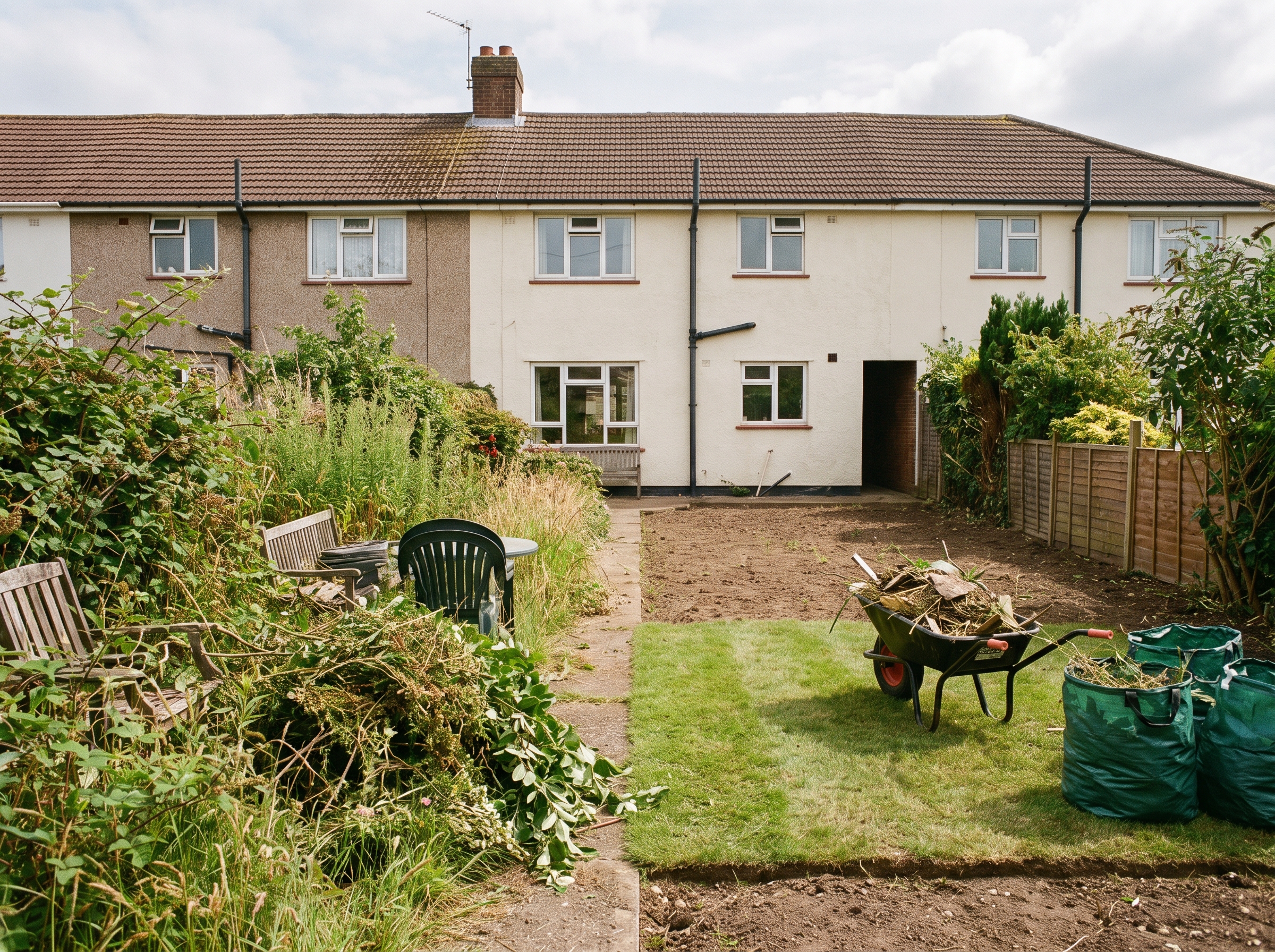
Garden Waste & Green Clearance in Liverpool & Merseyside: What You Can and Can't Dispose Of
That weekend garden blitz always feels satisfying — until you're standing there surrounded by bin bags of hedge clippings, a dismantled shed, and a pile of broken paving slabs wondering: how on earth do I get rid of all this?
Garden waste is one of the most common reasons people across Liverpool and Merseyside need a clearance service, yet it's also one of the most misunderstood. Some of it goes in your green bin. Some of it doesn't. Some of it is technically classified as construction waste. And dumping any of it illegally can land you with a fine — even if you thought you were just tidying up.
This guide breaks down exactly what counts as garden waste, what your council will and won't collect, when you need a professional clearance company, and how to keep costs down while staying on the right side of the law.
What Actually Counts as Garden Waste?
Garden waste — sometimes called "green waste" — covers organic material that comes from maintaining gardens, yards, and outdoor spaces. But not everything you find in a garden qualifies.
Green waste your council will accept
- Grass cuttings and lawn clippings
- Hedge trimmings and small branches (usually under 10cm diameter)
- Leaves, weeds, and dead plants
- Flowers and plant stems
- Small amounts of soil attached to roots
- Bark, twigs, and small prunings
Things people think are garden waste — but aren't
- Soil and turf (classified as inert waste, not green waste)
- Stones, gravel, and rubble
- Broken fencing, decking, and shed timber
- Paving slabs and concrete
- Plant pots (plastic or ceramic)
- Garden furniture
- Artificial grass
Council Garden Waste Collections: How They Work in Merseyside
Liverpool City Council
Liverpool offers a subscription-based garden waste collection. You pay an annual fee (typically around £35–£40) for a brown/green bin collected fortnightly between March and November. Collections pause over winter. You sign up online through the council website, and the bin is delivered to your address.
Sefton, Knowsley, Wirral & St Helens
Most Merseyside boroughs run similar subscription or opt-in garden waste schemes. Prices and collection schedules vary, but the format is broadly the same: a dedicated bin, fortnightly collection, seasonal pause, annual fee.
Council Collection vs Professional Clearance: When Do You Need Which?
The right option depends entirely on volume, material type, and urgency. Here's a practical breakdown:
| Scenario | Council bin | HWRC (tip run) | Professional clearance |
|---|---|---|---|
| Weekly lawn mowing clippings | ✓ Perfect fit | Not needed | Not needed |
| Annual hedge trimming | ✓ If it fits in the bin | ✓ For larger amounts | Rarely needed |
| Removing a medium tree | ✗ Too much volume | ✓ Multiple trips | ✓ One-off collection |
| Clearing an overgrown garden | ✗ Weeks of bins | ✗ Multiple car loads | ✓ Best option |
| Shed or decking removal | ✗ Not accepted | ✓ If you can transport it | ✓ They handle dismantling too |
| Soil, rubble, or slabs | ✗ Not accepted | ✓ With limits per visit | ✓ Best for larger amounts |
| Mixed garden & household waste | ✗ Green bin only for organics | ✗ Separate trips by type | ✓ Take it all in one go |
The tipping point is usually volume or mixed waste. The moment you're looking at more than two or three bin loads, or you've got a combination of green waste, timber, and hard materials, a professional clearance company will save you time, fuel, and repeated trips to the tip. For a full breakdown of when private clearance beats council collection on both cost and convenience, see our council vs private clearance guide for Liverpool.
What About Skip Hire for Garden Waste?
Skips are popular for garden projects, but they come with some drawbacks worth knowing about. If you've read our guide comparing house clearance and skip hire, the same principles apply to garden waste.
A mini skip (2 yards) typically costs £150–£220 in Liverpool. A midi skip (4 yards) runs £200–£300. You'll also need a council permit if the skip sits on a public road rather than your driveway — that's an extra £25–£40 and a few days' wait.
Skips work well when you have a single material type (e.g., all soil, all timber) and can fill the skip over a few days. They work less well when you need the space cleared quickly, when access is tight, or when you've got a mix of green waste and general rubbish. A clearance company turns up, loads everything, and takes it away — usually within a day of booking.
Composting: Can You Handle It Yourself?
Before you book anything, it's worth asking whether some of your garden waste can stay exactly where it is — in your garden, in a compost heap.
Composting works brilliantly for soft, nitrogen-rich green waste: grass cuttings, vegetable peelings, non-seeding weeds, annual plant stems, and leaf mould. A simple compost bin in the corner of your garden breaks this material down into rich, free soil conditioner over 6–12 months.
Composting does not work for woody branches (too slow to break down without chipping), perennial weed roots like bindweed or Japanese knotweed (they'll regrow), diseased plants (the disease can spread), or anything treated with chemicals like stained decking timber.
A practical composting rule of thumb
If you can tear it with your hands, it'll compost. If you need loppers or a saw, it probably won't — at least not in a standard garden composter. That tougher material needs to go to a commercial composting facility or be chipped first.
The Fly-Tipping Trap: Don't Fall Into It
Garden waste is one of the most commonly fly-tipped categories of waste in the UK, often because people underestimate the hassle and cost of disposing of it properly. A trailer load of hedge trimmings dumped on a country lane might seem harmless, but it carries real consequences.
We've covered this in depth in our fly-tipping guide, but the key takeaway is this: if you hand your garden waste to someone who doesn't hold a valid Waste Carrier Licence, and they dump it illegally, you can be held liable under the Duty of Care regulations. It doesn't matter that you paid them — the legal responsibility sits with the person who produced the waste.
Japanese Knotweed and Invasive Species: A Special Case
If your garden contains Japanese knotweed, giant hogweed, or Himalayan balsam, do not attempt to clear these yourself without specialist advice. Japanese knotweed in particular is classified as controlled waste under the Environmental Protection Act 1990 — it can only be disposed of at licensed landfill sites, and you're legally required to declare it.
Cutting it down, putting it in your green bin, or composting it will not kill it — it can regrow from fragments as small as 1cm. If you suspect you have Japanese knotweed, get a specialist survey before any clearance work begins. Your clearance company should be told about it upfront so they can handle it appropriately.
How Much Does Garden Clearance Cost in Liverpool?
Costs vary depending on the volume of waste, whether it's purely green waste or mixed with hard materials, and access to your property. As a rough guide for the Liverpool and Merseyside area:
| Job type | Typical cost range |
|---|---|
| Small garden tidy-up (few bags of clippings) | £60–£120 |
| Medium clearance (overgrown borders, hedge removal) | £150–£300 |
| Large garden clearance (full strip-out, mixed waste) | £300–£600 |
| Shed or decking removal (including disposal) | £150–£400 |
| Soil or rubble removal (per tonne) | £80–£150 per tonne |
The best way to get an accurate price is to get competing quotes from multiple companies. Photos of the garden help enormously — a clearance company can give you a much tighter estimate when they can see what they're dealing with rather than guessing from a description. For a detailed breakdown of general clearance pricing, see our house clearance cost guide.
A Quick Garden Clearance Checklist
- Separate soft green waste from hard materials (timber, rubble, soil) — they're handled differently
- Check if any green waste can be composted at home
- Take photos of everything that needs clearing — this helps companies quote accurately
- Check whether you need your council garden waste subscription renewed before the next collection
- Confirm your clearance company holds a valid Waste Carrier Licence
- Ask what happens to the waste — reputable companies will tell you their recycling and disposal routes
- Check access — can a van get close to the garden, or will everything need carrying through the house?
Frequently Asked Questions
Can I put soil in my garden waste bin?
No. Soil, turf, and earth are not classified as green waste. They're too heavy for the collection vehicles and can't be processed at green waste composting facilities. Take small amounts to your local household waste recycling centre (tip), or book a clearance for larger quantities.
What do I do with old garden fencing?
Treated timber fencing is not garden waste — it's general or construction waste. Your green bin won't take it, and it shouldn't be burned (treated wood releases toxic fumes). Take it to a HWRC or include it in a professional clearance booking.
Is artificial grass recyclable?
Artificial grass is made from plastic and cannot go in your garden waste bin or be composted. Some specialist recycling facilities accept it, but for most people in Merseyside, a clearance company or HWRC is the most practical option.
Can I burn garden waste in my garden?
There's no specific law against garden bonfires in the UK, but there are rules. If smoke from your fire causes a nuisance to neighbours, your council can issue an abatement notice. Burning treated wood, plastics, or household waste is illegal. As a rule, composting or professional disposal is always better than burning.
How do I dispose of a large tree I've cut down?
Large tree trunks and branches typically need a professional clearance. The volume is usually too much for a green bin or a single tip run. Some clearance companies work with wood recycling services — the timber may be chipped for biomass or repurposed, keeping costs and environmental impact down.
Do clearance companies take garden waste for recycling?
Reputable, licensed clearance companies separate green waste from other materials and send it to composting or recycling facilities wherever possible. Always ask about their disposal methods — companies on JunkBid are Waste Carrier Licensed, so your waste is handled responsibly.
Need a Garden Cleared in Liverpool & Merseyside?
Get free, no-obligation quotes from licensed clearance companies — all Waste Carrier verified before they can quote.
GET FREE QUOTES NOW →